Santa Giulia beach lies in a round bay south of the gulf of Porto-Vecchio: calm, shallow water, fine white sand and lagoon colours at the foot of the hills. Very popular with families, it is also one of the busiest water-sports hubs in the area. Here is how to get there from Pinarello, where to park, where to swim safely, and what you need to know about the “seaweed” sometimes seen on the sand.
Santa Giulia beach: a round bay and a lagoon
The Conservatoire du littoral describes a round bay opening to the east, overlooked to the south by the rocky massif of San Rafaellu, 253 m high. Its shallow depth and calm water make it a true lagoon: you can wade far out from the shore while still touching the bottom, which is reassuring with young children. The beach stretches out in a long ribbon of white sand, lined with several beach clubs.
It lies within the municipality of Porto-Vecchio, between the town and Bonifacio. To see how it compares with the other beaches in the area, see our overview of the most beautiful beaches of Porto-Vecchio.

Access and parking at Santa Giulia
From Pinarello, allow about 25 km and 35 minutes: take the T10 towards Porto-Vecchio, then continue towards Bonifacio. The Porto-Vecchio tourist office indicates two access routes: at Précojo, turn left towards Marina di Santa Giulia, or continue on the T10 and take the second road on the left towards Santa Giulia. In July and August, getting through Porto-Vecchio can make this journey considerably longer.
As for parking, several car parks serve the beach, some of them belonging to the beach clubs. The tourist office points out that some beaches have paying car parks in high season and advises arriving before 9:30 in July and August. Prices change every year: check them on site. Four spaces are reserved for people with reduced mobility.
Without a car, a summer bus line links Porto-Vecchio bus station to Santa Giulia every day in July and August, with a reduced service in September according to the operator. Check the year’s timetable on the Rapides Bleus website before you go.
Swimming, safety and accessibility
According to the Porto-Vecchio tourist office, Santa Giulia beach has a lifeguard post open every day from 1 July to 31 August. It opens at 11:15, swimming is supervised from 11:30 to 18:00, then the post closes at 18:15. Outside these hours, you swim at your own risk.
- Swim within the area marked by buoys during supervised hours.
- Even in shallow water, always keep children within arm’s reach.
- The beach is accessible to people with reduced mobility, with a beach mat and a beach wheelchair.
- On the beaches of the municipality of Porto-Vecchio, dogs are allowed on a lead.
“Seaweed” on Santa Giulia beach? The role of posidonia
As on other Mediterranean beaches, you may sometimes find heaps of brown leaves on the sand. These are generally not seaweed but dead leaves of posidonia, a flowering marine plant that forms vast seagrass meadows underwater. According to the French Biodiversity Agency, these “banks” of washed-up leaves play a major role in protecting beaches against erosion and stabilising them.
Posidonia is a protected species. The Porto-Vecchio tourist office also asks visitors to respect the banks found on some beaches. If you discover Santa Giulia by boat, avoid dropping anchor in the seagrass meadows: their protection is covered by orders from the Mediterranean maritime prefecture.
The Santa Giulia lagoon pond, a preserved natural area
Behind the beach, an elongated lagoon pond fills the head of the gulf. Fed by three streams, the Lezza, the Alzellu and the Vignarellu, it is separated from the sea by a strip of sand now occupied by tourist facilities. The Conservatoire du littoral, which protects some 293 hectares on the site, notes that the pond, choked by pollution in the early 1980s, has returned to a state close to its natural condition since discharges stopped and exchanges with the sea were restored.
Here you can observe the Corsican killifish (aphanius), a small protected fish that feeds in the ruppia beds, as well as songbirds and waterbirds. On Conservatoire land, camping, bivouacking, fires, dumping waste and motor vehicles are prohibited.
Santa Giulia is easily combined with its neighbour Palombaggia: our guide to Palombaggia beach details its access and lifeguard cover. And if you are still planning your trip, our article on getting to Pinarello by ferry or via Figari airport will help you organise your arrival.
Staying at Le Petit Pinarello to enjoy Santa Giulia
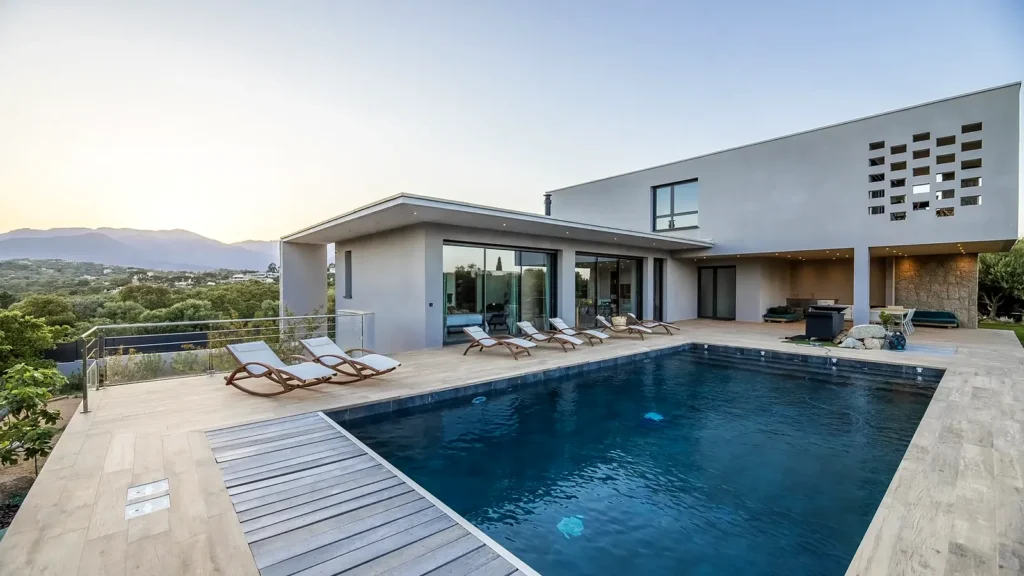
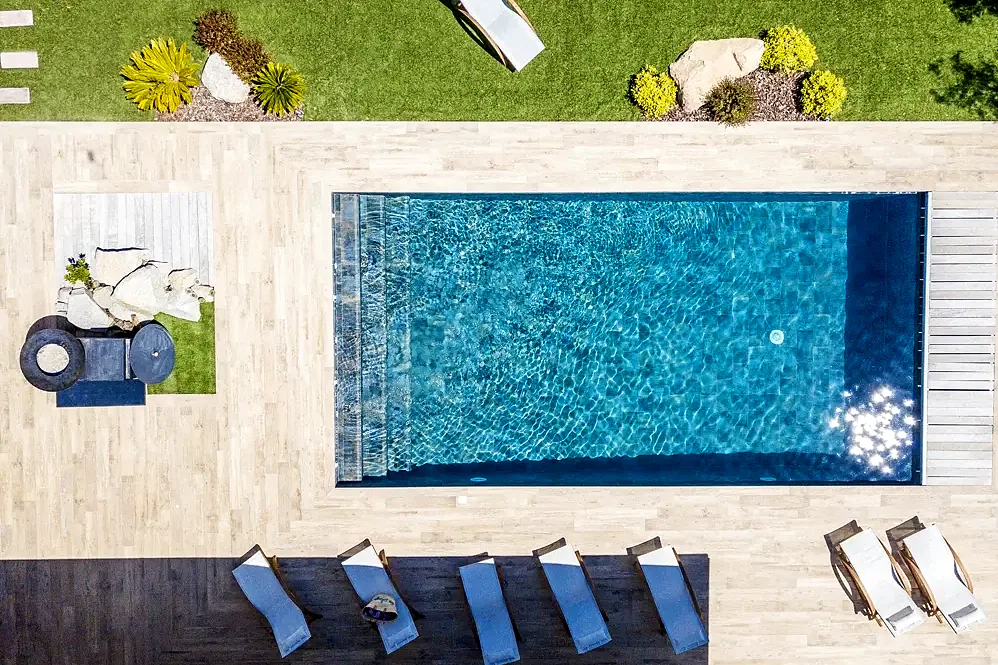
Le Petit Pinarello is in the hamlet of Pinarello, about 25 km from Santa Giulia and about 200 m from Pinarello beach, within walking distance for the days when you would rather stay somewhere quiet. The 200 m² villa has five bedrooms, including two master suites, for up to 10 guests, with a heated saltwater pool of about 50 m², a jacuzzi, a Mediterranean garden, a summer kitchen facing the pool and an OFYR brazier.
Discover the villa and its bedrooms, take a look at the rates (from 650 € per night), then check our availability to book.
À lire aussi : Meilleure période Corse du Sud : le guide mois par mois · Bonifacio : que faire en une journée depuis Pinarello · Corse-du-Sud en famille : activités et conseils pour les enfants · Excursion aux îles Lavezzi depuis Porto-Vecchio et les Cerbicale · Snorkeling à Porto-Vecchio et kayak à Pinarello : le guide
Frequently asked questions
Does Santa Giulia beach have lifeguards?
Yes, in summer: according to the Porto-Vecchio tourist office, a lifeguard post operates every day from 1 July to 31 August, with supervised swimming from 11:30 to 18:00.
Where can you park for Santa Giulia beach?
Several car parks serve the beach, some belonging to the beach clubs and paying in high season. In July and August, the tourist office advises arriving before 9:30; four spaces are reserved for people with reduced mobility.
Why is there “seaweed” on Santa Giulia beach?
The brown heaps sometimes seen on the sand are generally dead leaves of posidonia, a protected marine plant. According to the French Biodiversity Agency, these banks protect the beach from erosion.